A research-focused view of ovarian aging, tissue signaling, and women's regenerative health
Menopause and perimenopause are not defined only by declining hormone levels. They also reflect broader changes in ovarian signaling, vascular support, inflammatory balance, and tissue-level communication across multiple biologic systems.
As a result, reproductive aging is increasingly understood as a systems-level biologic transition rather than a single hormonal event.
Why this matters
During hormonal transition, the ovarian and surrounding tissue environments undergo meaningful changes in how cells communicate, respond to signals, and maintain tissue function.
These changes may include:
- • Altered cellular signaling pathways
- • Changes in vascular and stromal support
- • Shifts in inflammatory balance
- • Disruption of coordinated tissue-level communication
Understanding these changes is important because ovarian aging may involve more than endocrine decline alone. It may also reflect changes in the biologic environment that supports tissue resilience, cellular coordination, and regenerative signaling.
The BSP™ platform
BSP™ (Bio-Serum Particles) is a next-generation autologous biologic platform focused on the study of tissue communication and biologic signaling.
Rather than focusing on a single molecule or pathway, BSP™ is designed to explore coordinated signaling networks involving proteins, lipids, and regulatory nucleic acids within the body's own biologic environment.
This platform is being developed to help investigate how autologous particle-based signaling may relate to ovarian biology, endometrial response, tissue-level communication, and reproductive aging.
Why BSP™ is different
BSP™ is built around Bio-Serum Particles, a refined autologous signaling fraction intended to support a more focused biologic framework than broad blood-derived preparations.
This distinction allows BSP™ to be presented as:
- • A cell-free autologous biologic platform
- • A particle-focused signaling approach
- • A research-driven model for studying tissue communication
- • A next-generation framework for ovarian, endometrial, and pelvic tissue investigation
Biological signaling and particle science
Human tissues rely on dynamic communication systems that help regulate:
- • Cellular turnover and tissue maintenance
- • Inflammatory signaling pathways
- • Vascular and angiogenic processes
- • Hormonal communication networks
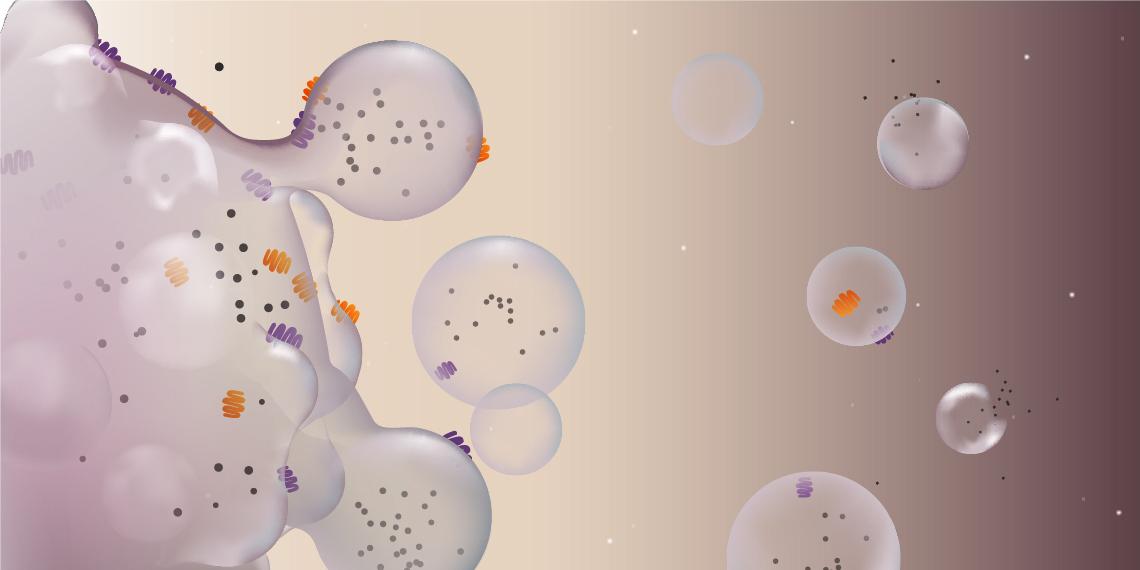
An important area of scientific interest is the role of extracellular vesicles and related biologic particles in intercellular communication.
These particles may carry:
- • Regulatory microRNAs
- • Messenger RNA fragments
- • Signaling proteins and enzymes
- • Lipid structures involved in membrane dynamics
This area of study is especially relevant in reproductive aging, where coordinated communication between ovarian, stromal, vascular, and endometrial tissues may influence how biologic transition is experienced over time.
Areas of ongoing investigation
Current areas of interest include:
- • Ovarian microenvironment signaling
- • Endometrial tissue response and communication
- • Stromal and vascular interactions
- • Cellular signaling during hormonal transition
- • Biologic patterns associated with late reproductive age and menopause
Research approach
BSP Biologics is committed to a structured, data-driven research model that may include:
- • Standardized clinical data capture
- • Laboratory characterization
- • Longitudinal follow-up
- • Multi-center clinical programs
- • Protocol-driven evaluation of investigational use cases
This research-first approach is intended to support responsible scientific development, physician collaboration, and high-quality clinical observation.
Scientific context
Emerging research suggests that menopause and the menopausal transition involve more than changing estradiol levels alone. Published studies describe the transition as a broader biologic process associated with ovarian aging, altered cellular signaling, inflammatory and vascular changes, and measurable shifts in systemic biologic aging patterns.
Published literature has also highlighted the role of extracellular vesicles and related biologic particles as carriers of proteins, lipids, and regulatory nucleic acids involved in intercellular communication. These findings help support the broader scientific framework for studying tissue-level signaling and biologic communication in reproductive aging and women's health.
Selected scientific reading
For patients and physicians
Patients interested in learning more about investigational research involving BSP™ during reproductive aging, perimenopause, or menopause are encouraged to speak with their physician.
Physicians, clinics, and research partners interested in scientific collaboration or future investigational programs may contact BSP Biologics for additional information.